The Future of Geothermal Technology and the Next Generation of Drilling
Introduction: The Awakening Giant
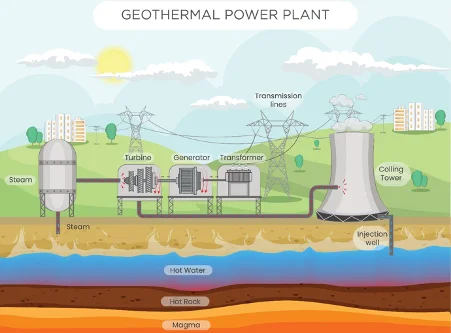
For decades, geothermal energy has been the “sleeping giant” of the renewable energy world. While solar and wind have seen exponential growth and massive cost reductions, geothermal has remained a steady but niche player, largely confined to volcanic regions like Iceland, New Zealand, and parts of California. These traditional systems, known as hydrothermal systems, rely on a “Goldilocks” geology: hot rock, naturally occurring water, and permeable pathways (fractures) for that water to move through.
However, the global energy landscape is shifting. As the world seeks to decarbonize, the limitations of intermittent renewables – which require the sun to shine or the wind to blow – are becoming apparent. The grid needs “baseload” power: reliable, clean electricity that runs 24/7. This is the promise of the future of geothermal technology. By moving beyond naturally occurring hot springs and tapping into the heat stored deep within the Earth’s crust (which is available everywhere), geothermal has the potential to transition from a niche resource to a global powerhouse.
Enhanced Geothermal Systems (EGS): Engineering the Reservoir
The first major leap in this technological revolution is the development of Enhanced Geothermal Systems (EGS). In vast areas of the planet, the rock deep underground is hot enough to generate electricity, but it lacks the water or the cracks needed to transport that heat to the surface. EGS solves this by essentially creating a man-made underground radiator.
Engineers drill deep injection wells into hot, dry rock formations (often granite). High-pressure fluid is then injected to shear open natural fractures in the rock, creating a network of permeability. This process, while similar in concept to hydraulic fracturing used in oil and gas, operates at lower pressures intended to shear rock rather than pulverize it. Once the reservoir is created, water is circulated down, heated by the rock, and returned to the surface via production wells to spin a turbine.
The potential of EGS is staggering. Estimates suggest that tapping into just 2% of the thermal energy between 3 and 10 kilometers depth in the continental United States could supply more than 2,000 times the country’s total annual energy use (Tester et al., 2006).
The Drilling Frontier:Going Deeper and Hotter
To realize the dream of EGS and “Geothermal Anywhere,” we must drill deeper (often 20,000 feet or more) and into much hotter, harder rock than the oil and gas industry typically encounters. This presents immense engineering challenges. The granite and basalt formations found in geothermal zones are incredibly abrasive, wearing down drill bits rapidly. Furthermore, the temperatures – often exceeding 350°F (175°C) and reaching up to 700°F (370°C) in “supercritical” projects – can melt sensitive electronics and degrade drilling fluids.
Success depends on the Bottom Hole Assembly (BHA). This is the collection of tools at the very end of the drill string. In modern directional drilling, which is essential for creating the precise well trajectories needed to connect injection and production wells, the drill bit is often rotated by a motor located directly above it, rather than rotating the entire miles-long steel pipe from the surface.
The Mud Motor: The Workhorse of the Depths
The most common tool used for this is the Positive Displacement Motor (PDM), commonly known as a “mud motor.” This tool converts the hydraulic power of the drilling fluid (mud) pumped down the drill string into mechanical rotation.
Inside the motor, there is a helical rotor that turns inside a molded stator. As the drilling mud is forced through the cavities between the rotor and stator, it forces the rotor to spin. This allows the drill bit to rotate at high speeds while the drill pipe above it remains relatively stationary or rotates slowly. This capability is crucial for “steering” the well.
The image above illustrates the internal mechanism. The fluid flow (indicated by the path of the mud) generates torque. For geothermal applications, the “elastomer” (rubber) parts of the stator must be replaced with high-temperature polymers or metal-to-metal designs to survive the extreme heat.
Visualizing the Mechanics: Rotation and Destruction
The efficiency of rock reduction depends on the interaction between the drill bit and the rock face. Polycrystalline Diamond Compact (PDC) bits are the standard, using synthetic diamond cutters to shear the rock.
When coupled with a downhole motor or a turbodrill (a turbine-based alternative for extreme heat), the rotation is localized. The diagram below highlights this dynamic. You can see the drill string (the main pipe) holding the assembly, while the motor section drives the bit.
The curved arrows indicate the rapid rotation of the bit head, independent of the drill string. This high-speed rotation, combined with the “weight on bit” (downward pressure), crushes and shears the hard granite, turning it into small rock chips that are carried back to the surface by the drilling fluid.
Advanced Geothermal Systems (AGS): The Closed-Loop Revolution
While EGS focuses on creating flow through rock, another emerging technology is Advanced Geothermal Systems (AGS), or closed-loop geothermal. Think of this as an underground heat exchanger buried deep in the Earth.
Instead of injecting water into the rock, AGS circulates a working fluid within a sealed loop of pipes. The fluid travels down, absorbs heat through conduction from the surrounding rock, and returns to the surface hot. Because the system is sealed, there is no risk of induced seismicity (earthquakes) and no need to find water resources in arid environments.
These systems rely heavily on the “radiator” effect. Recent innovations include drilling complex “multilateral” well designs—where a single vertical well branches off into dozens of horizontal laterals—to maximize the surface area in contact with the hot rock. This approach effectively harvests heat primarily through conduction, making it feasible in a wider variety of geological settings, not just volcanic areas.
Conclusion: A Just Transition
The future of geothermal is not just about technology; it is about workforce and economic transition. The skills required to drill deep geothermal wells—geology, drilling engineering, reservoir management—are nearly identical to those in the oil and gas industry. As the world moves away from fossil fuels, geothermal offers a direct pathway for millions of skilled workers to transition into the green economy without their skills becoming obsolete.
We are standing on the precipice of a new energy era. By combining the reliability of traditional baseload power with the ubiquity of solar and wind, next-generation geothermal technology offers a solution to the clean energy puzzle. With advancements in high-temperature electronics, drill bits, and downhole motors, we are finally developing the tools to unlock the heat beneath our feet, turning the Earth itself into our ultimate battery.
References
Tester, J. W., et al. (2006). The Future of Geothermal Energy: Impact of Enhanced Geothermal Systems (EGS) on the United States in the 21st Century. Massachusetts Institute of Technology (MIT) & U.S. Department of Energy.
U.S. Department of Energy. (2019). GeoVision: Harnessing the Heat Beneath Our Feet. Office of Energy Efficiency & Renewable Energy.
Beckers, K. F., & McCabe, K. (2019). Geothermal Electricity Generation from Deep Sedimentary Basins. National Renewable Energy Laboratory (NREL).
Vigor Drilling. (2024). Technical Features of Mud Motors for Directional Drilling. Vigor Petroleum Technical Blog.
Longdom Publishing. (2023). Closed-Loop Geothermal Systems in Sustainable Energy. Journal of Fundamentals of Renewable Energy and Applications.
Gholami, R., et al. (2019). Mechanical Strength Improvement of Mud Motor’s Elastomer by Nano Clay. International Journal of Engineering.
Cookie Consent
This website use cookies to help you have a superior and more admissible browsing experience on the website.
By clicking “Accept all cookies”, you agree Stack Exchange can store cookies on your device and disclose information in accordance with our Cookie Policy
Accept All Accept Only Necessary Customize
Cookie Consent Preference Center
Strictly Necessary Cookies
These cookies are necessary for the website to function and cannot be switched off in our systems. They are usually only set in response to actions made by you which amount to a request for services, such as setting your privacy preferences, logging in or filling in forms. You can set your browser to block or alert you about these cookies, but some parts of the site will not then work. These cookies do not store any personally identifiable information.
Performance Cookies
These cookies allow us to count visits and traffic sources so we can measure and improve the performance of our site. They help us to know which pages are the most and least popular and see how visitors move around the site. All information these cookies collect is aggregated and therefore anonymous. If you do not allow these cookies we will not know when you have visited our site, and will not be able to monitor its performance.
Functional Cookies
These cookies enable the website to provide enhanced functionality and personalisation. They may be set by us or by third party providers whose services we have added to our pages. If you do not allow these cookies then some or all of these services may not function properly.
Targetting Cookies
These cookies are used to make advertising messages more relevant to you and may be set through our site by us or by our advertising partners. They may be used to build a profile of your interests and show you relevant advertising on our site or on other sites. They do not store directly personal information, but are based on uniquely identifying your browser and internet device.