The Future of Geothermal Technology and its Potential for Electricity Generation
Geothermal energy, the heat emanating from the Earth’s core, is a powerful, reliable, and clean energy source that has been utilized for decades. Unlike solar or wind, which are intermittent, geothermal energy provides baseload power—running 24/7, regardless of weather conditions. However, its current contribution to the global electricity mix is relatively small, largely constrained by the geographical availability of naturally occurring hydrothermal resources, where heat, water, and rock permeability coexist near the surface. The future of geothermal technology lies in breaking free from these constraints, unlocking vast amounts of heat stored deeper within the Earth’s crust through innovative methods. This evolution promises to transform geothermal from a niche player into a cornerstone of a sustainable global energy future.
Moving Beyond Hydrothermal: Enhanced Geothermal Systems (EGS)
The most significant leap forward is the development of Enhanced Geothermal Systems (EGS). Traditional geothermal plants rely on naturally existing reservoirs of hot water. EGS technology, however, allows us to create reservoirs where none exist. This is achieved by drilling deep into hot, dry rock formations that lack the natural permeability and water needed for conventional systems.
Once the wells are drilled, fluid (typically water) is injected at high pressure to re-open existing fractures or create new ones in the hot rock. This process, known as hydraulic stimulation, creates a network of pathways. The injected water is heated as it continuously circulates through this newly created subterranean radiator and is then pumped back to the surface through a production well to generate electricity.
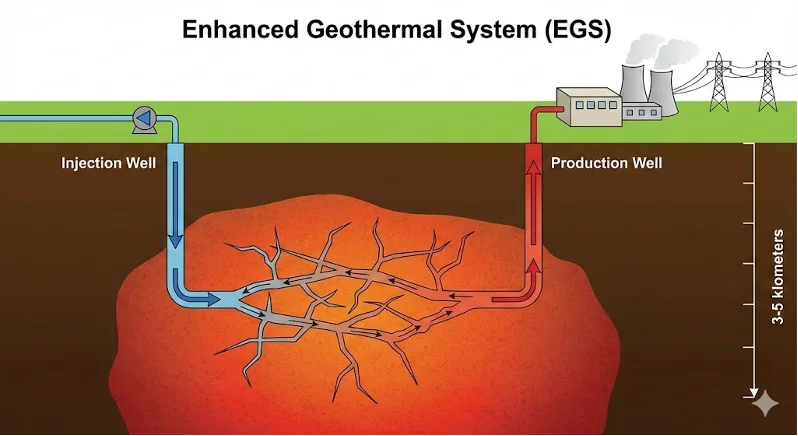
By enabling access to heat resources almost anywhere, EGS has the potential to vastly expand the geographic footprint of geothermal energy, moving it from a regional resource to a truly global one.
The Crucial Role of Advanced Drilling Technology
Unlocking the potential of EGS and other advanced concepts requires drilling deeper and faster into hotter, harder rock than ever before. This is a significant technological and economic challenge. The drilling process itself must be highly efficient to make these projects viable. A key component of modern drilling assemblies is the downhole motor, which allows the drill bit to rotate without needing to rotate the entire miles-long drill string from the surface.
This is particularly important in directional drilling, which is essential for creating the precise well geometries needed for EGS. The “mud motor,” a common type of downhole tool, uses the hydraulic power of the drilling fluid (mud) pumped down the string to turn a rotor and stator, which in turn rotates the bit.
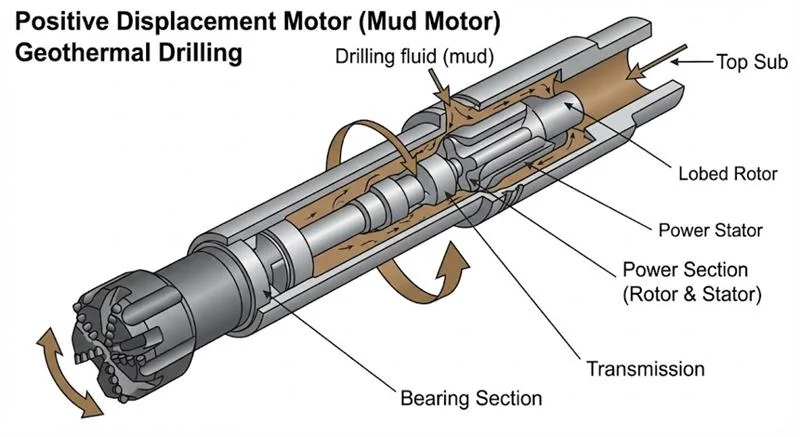
Advancements in materials science are also producing drill bits that can withstand the extreme temperatures (exceeding 300°C or 572°F) and the abrasive nature of the deep granitic rocks encountered in geothermal wells. The efficiency of the entire Bottom Hole Assembly (BHA), which includes the bit, motor, and other sensors, is paramount.
To further illustrate the drilling technology, here is another view of a drilling tool component, specifically focusing on a high-performance drill bit. The visual below indicates the specific rotation of the bit head, driven by the motor above it, which is crucial for grinding through hard rock formations.
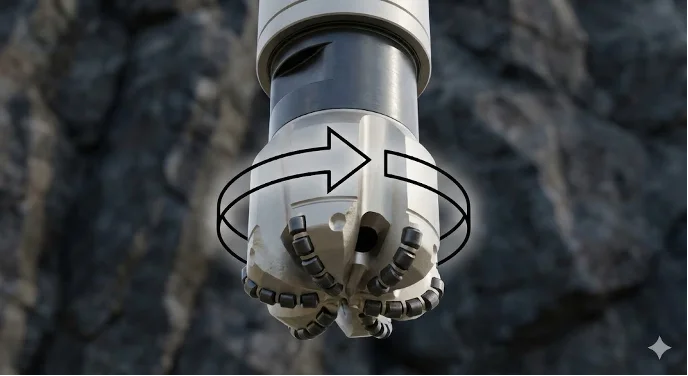
These advancements in drilling—from more powerful downhole motors to ultra-durable bits—are the unsung heroes that will make next-generation geothermal a reality.
Next-Generation Concepts: Closed-Loop and Supercritical Systems
Beyond EGS, other innovative concepts are emerging. Closed-Loop Geothermal Systems, sometimes called “advanced geothermal,” involve drilling a sealed network of pipes, often in a radiator-like pattern, deep underground. A working fluid is circulated through these pipes, absorbing heat from the surrounding rock without ever coming into direct contact with it. This eliminates the need for fracking or water stimulation, making it a potentially more environmentally benign option that can be deployed in a wider variety of geological settings.
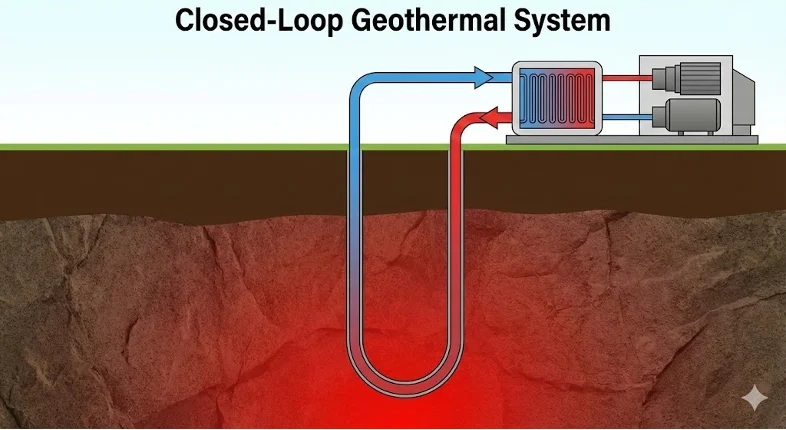
Another frontier is Supercritical Geothermal. This involves drilling even deeper, into regions where water exists in a “supercritical” state—a phase where it is neither liquid nor gas but has properties of both. Supercritical water is incredibly energy-dense and can carry far more heat than liquid water or steam, potentially allowing for much smaller, more powerful power plants. Tapping into these resources, often found near magma chambers, presents extreme engineering challenges but offers a massive payoff in terms of energy output.
The Potential: A Clean, Flexible Global Energy Backbone
The successful development of these technologies could unlock a staggering amount of energy. The heat energy within the top few miles of the Earth’s crust is thousands of times greater than the energy contained in all known oil and gas reserves. By tapping into even a small fraction of this, geothermal could provide a significant portion of the world’s electricity.
Furthermore, modern geothermal plants are not just about baseload power. They can be designed to be flexible, ramping their output up or down to balance the variable supply from wind and solar. This dispatchable quality makes geothermal an ideal partner for intermittent renewables, helping to stabilize the grid and ensure a reliable electricity supply in a decarbonized future.
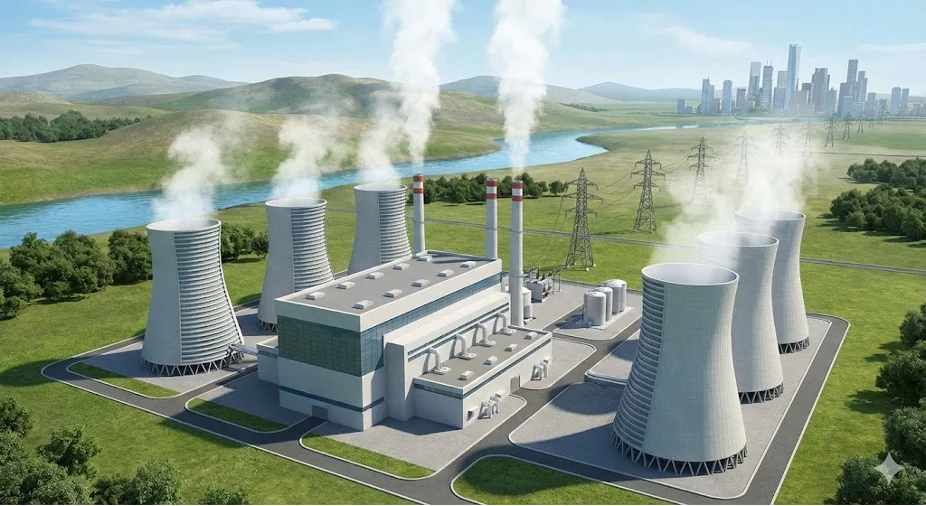
In conclusion, the future of geothermal technology is bright. By moving beyond the limitations of hydrothermal resources through innovations like EGS, closed-loop systems, and advanced drilling technologies, we are on the cusp of unlocking a virtually limitless source of clean, reliable, and flexible electricity. Overcoming the technical and economic challenges of deep drilling and reservoir creation will be key, but the potential reward—a sustainable energy backbone for the planet—is immense.
References
- Tester, J. W., Anderson, B. J., Batchelor, A. S., et al. (2006). The Future of Geothermal Energy: Impact of Enhanced Geothermal Systems (EGS) on the United States in the 21st Century. Massachusetts Institute of Technology (MIT).
- U.S. Department of Energy (DOE). (2019). GeoVision: Harnessing the Heat Beneath Our Feet. Office of Energy Efficiency & Renewable Energy.
- Finger, J., & Blankenship, D. (2010). Handbook of Best Practices for Geothermal Drilling. Sandia National Laboratories.
- Livescu, S., et al. (2019). Opportunities for Advanced Drilling Technologies in Geothermal Energy. SPE/IADC International Drilling Conference and Exhibition.
- Beckers, K. F., & McCabe, K. (2019). Geothermal Electricity Generation from Deep Sedimentary Basins. National Renewable Energy Laboratory (NREL).
